


Discover the solar potential of your Arizona home
Start by entering your zip code below
Average homeowner saves $50-$200/mo
Claim solar incentives worth up to $8,934
No cost upfront if your roof qualifies

Discover the solar potential of your Arizona home.
Start by entering your zip code below
No junk mail. No spam.
Save $50-$200 per month on average
Claim solar incentives worth up to $8,934
No cost upfront when your roof qualifies
No personal info required to see savings

A 8 kW system can save a family $1,700/year in Arizona
300+ Days of Sunshine
Why choose solar in Arizona?
With more than 300 days of sunshine each year, Arizona is the optimal location for solar panel systems to thrive. This year, rates are expected to increase again by at least 8-percent. Switching to solar lowers your bill, protects you from annual rate increases and puts the control back in your hands.
Federal gov't covers up to 30% of the cost
Expensive electricity means big savings
Sales and property tax exemption
Utilities credit you for your excess energy
Arizona homeowners can save $1,700/year with an 8 kW system
300+ Days of Sunshine
Why choose solar in Arizona?
With more than 300 days of sunshine each year, Arizona is the optimal location for solar panel systems to thrive. This year, rates are expected to increase again by at least 8-percent. Switching to solar lowers your bill, protects you from annual rate increases and puts the control back in your hands.
Federal gov't covers up to 30% of the cost
Expensive electricity means big savings
Sales and property tax exemption
Utilities credit you for your excess energy
Up to $1,000 from state of Arizona
Easy as 1, 2, 3
Easy as 1, 2, 3
How It Works

Provide basic information
Start by entering basic information about your home. We will calculate savings and provide your free analysis in minutes.

Get instant results
We will analyze your address and local utility provider to share cost saving information for your home.

Compare providers
See top rated solar providers near you. Compare costs and make smart financial choices regarding your solar project.

The savings are clear
Use our 100% free online Solar Savings Calculator to help you decide if solar is worth it for you.
Enter basic info like your average electric bill to see your potential savings in 60 seconds.
The savings are clear.
Use our 100% free online Solar Savings Calculator to help you decide if solar is worth it for you. Enter basic info like your average electric bill to see your potential savings in 60 seconds.
No junk mail. No spam.
More affordable than ever
How much does solar cost in Arizona in 2024?
The short answer: less than your current electric bill. The exact cost and savings of your system may vary depending on several factors like how many panels you need, but our homeowners typically save around 20 to 30 percent right out of the gate.
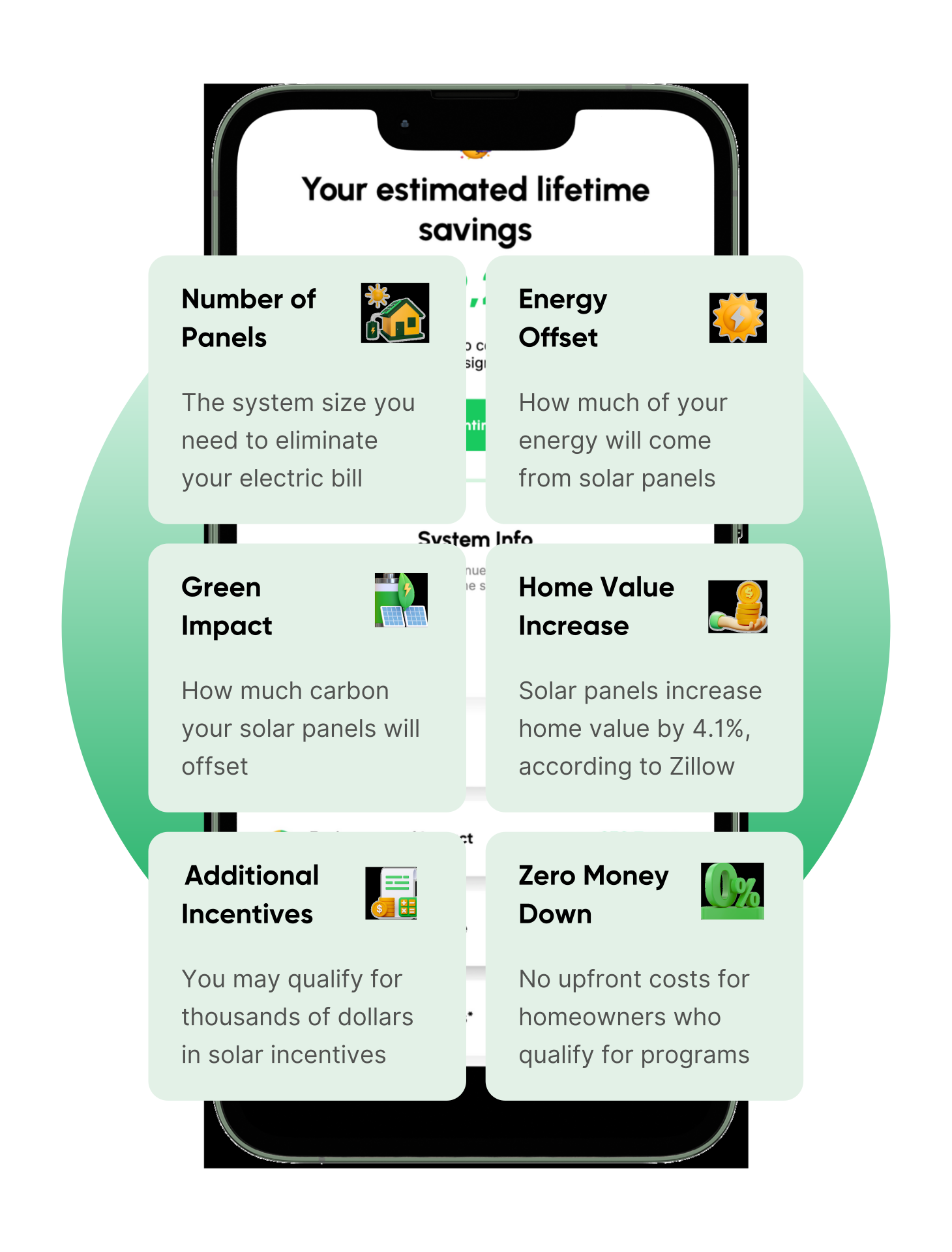
More affordable than ever
How much does solar cost in Arizona in 2024?
The short answer: less than your current electric bill. The exact cost and savings of your system may vary depending on several factors like how many panels you need, but our homeowners typically save around 20 to 30 percent right out of the gate.
Arizona Solar Incentives
30% Solar Tax Credit
Qualified homeowners in Arizona are eligible for a tax credit of up to 30% of the total cost of installing their system.

AZ State Tax Credit
Arizona residents are offered a tax credit for the cost of a solar installation. You could receive up to $1,000.

State Tax Exemptions
Arizona homeowners who go solar aren't taxed on their home value increase, and are exempt from the 5.6% state sales tax.
Arizona Solar Incentives
Between the federal tax credit and significant solar rebates available exclusively to Illinois homeowners, thousands of dollars could be available for you to put towards your solar panels with no upfront cost.
30% Solar Tax Credit
Qualified homeowners in Arizona are eligible for a tax credit of up to 30% of the total cost of installing their system.
AZ State Tax Credit
Arizona residents are offered a tax credit for the cost of a solar installation. You could receive up to $1,000.
State Tax Exemptions
Arizona homeowners who go solar aren't taxed on their home value increase, and are exempt from the 5.6% state sales tax.
See if you qualify for
solar incentives
Solar plans for every budget
"Every family has different goals and budgets, so there's no one-size-fits-all with solar. Our staff rated the Solar PPA the highest because it's the most accessible option (you just need decent credit), and there's no loan. That's very attractive to many homeowners."
Hilary Baird
Editor
Solar Loan
4.5/5
Staff Rating
For homeowners who want to own their system but pay over time
Instant solar savings
You own the system
Keep or apply tax credit
No prepayment penalty
Solar PPA
5/5
Staff Rating
For homeowners who want the simplest and easiest path to solar savings
Instant solar savings
No loan
Maintenance and repairs covered
Tax credit applied automatically
Solar Purchase
4.2/5
Staff Rating
For homeowners who can afford to wait a few years to break even
Most overall savings
Pay upfront for the system
Keep your tax credit
Own your power
Solar plans for every budget
"Every family has different goals and budgets, so there's no one-size-fits-all with solar. Our staff rated the Solar PPA the highest because it's the most accessible option (you just need decent credit), and there's no loan. That's very attractive to many homeowners."
Hilary Baird
Editor
Solar Loan
4.5/5
Staff Rating
For homeowners who want to own their system but pay over time
Instant solar savings
You own the system
Keep or apply tax credit
No prepayment penalty
Solar PPA
5/5
Staff Rating
For homeowners who want the simplest and easiest path to solar savings
Instant solar savings
No loan
Maintenance and repairs covered
Tax credit applied automatically
Solar Purchase
4.2/5
Staff Rating
For homeowners who can afford to wait a few years to break even
Most overall savings
Pay upfront for the system
Keep your tax credit
Own your power
Frequently Asked Questions

How much do solar panels cost?
Most household installations cost between $16,000 and $35,000, depending on the type, model and more. This does not include any tax credits or other incentives or calculate the reduction in costs when you stop paying for electrical utilities.
How many solar panels do I need?
To achieve 100% coverage of electricity needs, the average household in the United States will need approximately 20 to 25 panels. This estimate will fluctuate with factors such as your household’s energy habits, sun exposure, geographic location and panel efficiency.
For a precise count, a home energy audit and consultation can determine how much electricity your system needs to generate and how much storage capacity is necessary to power your home 24 hours a day.
The consultation will result in calculating the number of panels your home requires and any associated energy storage solutions.
How much of my home can be powered by solar?
That depends on your overall household energy usage relative to the total capacity of your solar array. Many homeowners desire a system size producing 100% of their energy usage needs, but that may not always be possible. Alternatively, if you plan to change your behavior, such as by purchasing an electric vehicle, you may wish to go a little larger than historical usage. A free consultation will get you an accurate calculation to meet your needs.
How long do solar panels last?
Most solar panels have a lifespan of 25 to 30 years before they begin to lose substantial efficiency. Reputable solar panel manufacturers typically provide a performance guarantee that states their panels will produce at least 90% of their original output after 10 years and around 80% after 25 years of use.
Will solar panels hurt my roof?
When installed correctly, getting solar panels installed on your home should not damage your roof. Make sure your solar system is installed by a licensed, qualified professional. They’ll make sure your roof is in good condition for a solar panel install.
What if I move?
That's no problem at all. Your solar company will work with you to transfer the panels over to the new homeowner and you get to walk away without any strings attached.
Since you made it this far...
Since you made it this far...
It only takes a minute to see your solar savings potential.
No hassle. No spam.

